| Previous Page |
PCLinuxOS Magazine |
PCLinuxOS |
Article List |
Disclaimer |
Next Page |
ICYMI: More Than 1,000 Employees Of Leading AI Companies Ask For Guardrails |
by Paul Arnote (parnote)
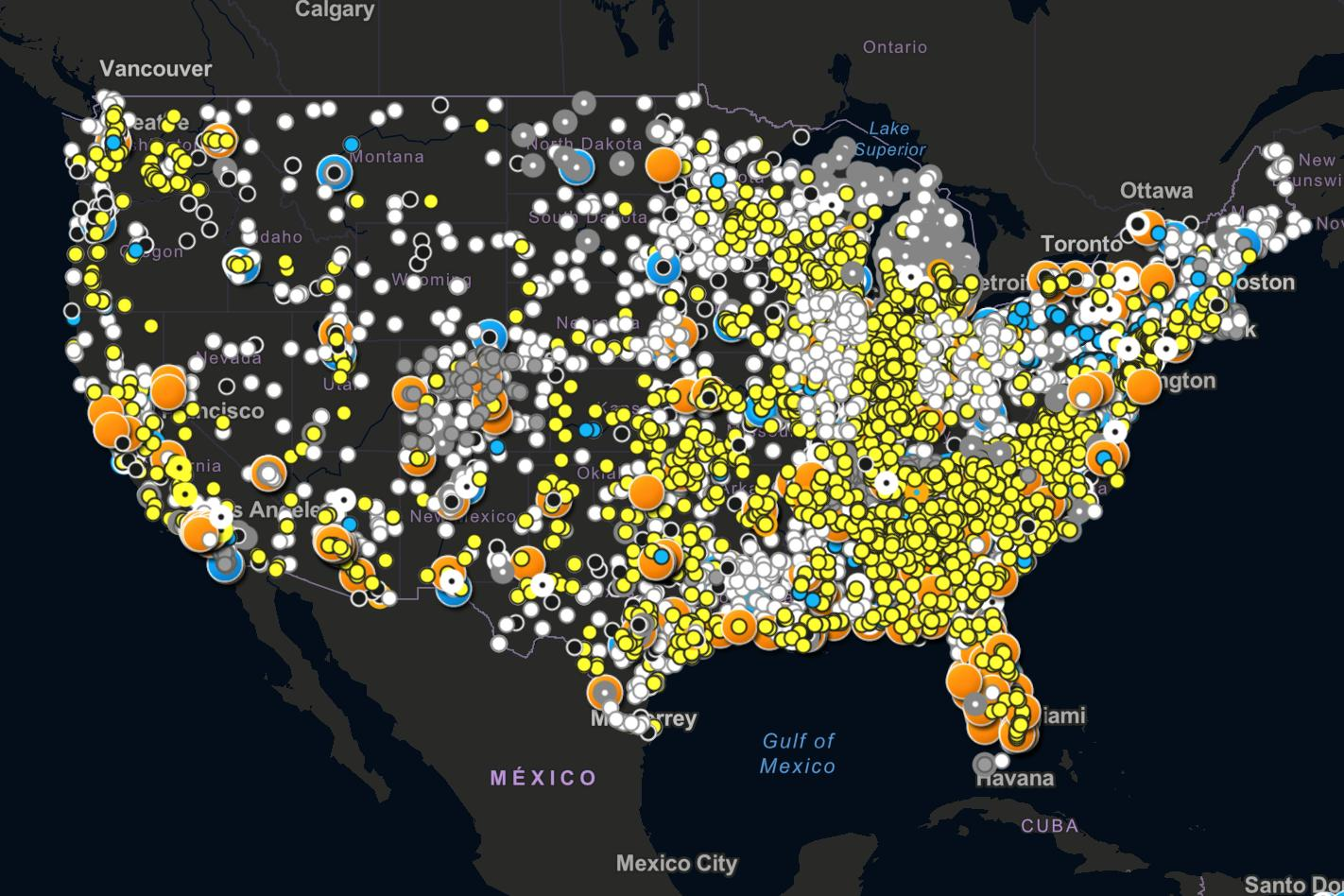 Recent coverage of Flock Safety, the fast-growing US surveillance technology company, reveals how opposition to automated license plate readers is playing out at the local level, according to an article from CNET. To track such surveillance, journalists and researchers are increasingly turning to a free tool called the Atlas of Surveillance, a collaboration between the renowned digital privacy group Electronic Frontier Foundation and the University of Nevada, Reno. The site has become a go‑to source for mapping police technology — which also includes drones, facial-recognition cameras and body cameras — with a searchable database that’s often more dependable than alternatives. With the Atlas of Surveillance tool, you enter a city, county, state, law enforcement agency or vendor in the US and select which technology you’re interested in tracking. You’ll get a list of details based on your search, including links to public records or news articles. If you’re the least bit interested in how your tax dollars are being spent to track your every movement in a “free society,” you need to read this entire article. Do you "accept" or "reject" that cookie request? Browser cookies don’t just remember your login details: They can track your browsing history across websites, follow you around with specific ads, or even hijack your active browser session to log into your accounts without a password, according to an article from Lifehacker. On the other hand, if you don’t click accept when you see a cookie banner, that can affect your browsing experience—many websites need cookies to function normally. Luckily, cookie management isn’t just a binary choice any more. You can choose which cookies to accept on a website, auto-delete cookies after a set amount of time, or even switch between browser profiles to control which cookies stay active during a session. The article provides 10 proven hacks to help manage browser cookies. Researchers testing a cheap, homegrown oil in Uganda found what cats knew all along – it worked as well as the artificial chemical used globally, according to an article from The Guardian. A homegrown catnip lotion has proven “just as effective as Deet” as a mosquito repellant in trials carried out in Uganda. Catnip, or Nepeta cataria, is a common herb from the mint family. The chemical in the plant that causes feline euphoria – nepetalactone – also has insect-repelling properties, but this has not previously been commercialised. In a study presented at the Society for Experimental Biology conference in Florence on Tuesday, a team working between Uganda and Wales found mosquitoes seeking a blood meal were less likely to land on people wearing lotions made from catnip.  Image by Gerd Altmann from Pixabay More than 1,000 employees at America’s leading AI companies, including senior staff members and some co-founders at OpenAI, Anthropic and Google DeepMind, signed a statement asking the U.S. government to help support international efforts to “deliberately pace” cutting-edge automated AI development, according to an article from NBC News. Highlighting recent comments from the world’s most advanced AI companies that AI systems may soon be able to automate their own research and development, the statement calls on the U.S. government to help create technical and policy tools that could control automated AI progress in coordination with other companies and countries. “To realize AI’s potential, industry, government, and society at large may need the option to buy time to address emerging risks, develop security measures, and strengthen oversight,” the statement says. “We request that the U.S. government support an international effort to develop the technical and governance tools needed to deliberately pace the frontier of automated AI development,” it concludes. Email aliases were once a niche privacy trick, according to an article from Lifehacker. Now, though, they're a mainstream solution offered by any number of major email service providers, including Apple, DuckDuckGo, SimpleLogin, and Firefox. Getting a basic alias set up and running to conceal your real email address is easier than ever — but given recent data leaks and sophisticated cyber attacks, it's increasingly clear that a basic setup only gets you so far. That’s why cybersecurity experts now recommend having a nuanced email alias strategy that combines multiple aliases and secure authentication protocols to keep your real inbox away from prying eyes. This Lifehacker article talks about seven ways you can make your use of email aliases more secure. What do you do when the border authorities stop you at the airport and want to seize your phone, but you think that’s illegal? Tell them a “duress” passcode, a feature kindly provided by GrapheneOS, that wipes the device, of course. The US Department of Justice (DoJ) disagrees, according to an article from Cybernews (and widely reported on by many media outlets). The DoJ is prosecuting one Samuel Tunick, an Atlanta resident, who the authorities say provided them with a passcode that destroyed the data on his smartphone. As court documents show, Tunick is accused of using the aforementioned feature included in GrapheneOS, a custom Android operating system that you can choose to run in place of the software on most modern Google Pixel devices. The feature allows the phone owner to set a passcode that wipes the data on the device if entered instead of the user’s unlock passcode.  Image by Gerd Altmann from Pixabay Flock cameras are getting mobbed, according to an article from CNN. Over the last few months, people have cut down surveillance cameras owned by the company Flock Safety with an electric saw in upstate New York, thrown paint on them in Oakland, California, and rammed a truck into them in Idaho. One man in Florida sits in a lawn chair holding up a piece of cardboard on a pole to block the camera’s view. City governments have joined in by deactivating the cameras or canceling contracts with Flock in Fort Collins, Colorado; Eugene, Oregon; Madison, Wisconsin; Knoxville, Tennessee; Syracuse, New York; and Walla Walla, Washington. Flock sells its services as a crime-fighting tool, built on a network of cameras that record and analyze everything that passes by them. Law enforcement agencies that have contracts with Flock use its troves of observed license plate numbers and other vehicle data to track or reconstruct the movements of vehicles in criminal investigations. Flock says it has 120,000 automated license plate reader (ALPR) and pan, tilt, and zoom (PTZ) cameras deployed throughout the US, capturing tens of billions of data points a month. Flock’s ALPRs automatically scan every license plate that passes them, while the PTZs record live footage that can be reviewed and analyzed. Because Flock cameras are all connected, the result is a nationwide latticework of recorded activity. Across the majority of states, a police officer in one state can be alerted if a car they’re looking for pops up in another and can inform the local authorities. Want to see another instance of Flock cameras running amok? Check out this article from NotTheBee (a.k.a. Babylon Bee). Meanwhile, you can check to see if your license plate has been “flocked” here. If you truly care about your privacy, disabling cookies is no longer enough to guarantee your anonymity on the internet, according to an article from Lifehacker. Luckily, browsers like Safari, Firefox, Brave, and others have evolved to address this problem using more privacy features that cost nothing to enable. Uninterrupted browsing used to be a lot simpler: Disable all third-party cookies, blacklist known tracking domains, and get an ad blocker. But now, online platforms can pick up on things like your screen resolution, basic hardware specs, time zone, and installed fonts to establish a fingerprint unique to your browser and device. Websites can query a lot of seemingly harmless data from your device without prompting any security reaction, which, over time, they can use to trace your browsing activity. If you’re curious about what kind of data your browser might be leaking to websites, EFF’s Cover Your Tracks lets you run free scans that show you exactly how exposed you are. You can also rerun this check as many times as you want after adjusting your privacy settings. The site generates an immediate report that tells you whether you have cookies or trackers enabled in your browser, along with the types of data your device is leaking that can be accessed by fingerprinting technology. [Taps plays in the background]. Another Google “service” meets its death. I was informed of this by an email. The email states, “We’re writing to let you know that the Google Assistant on your mobile device is being discontinued, and Gemini — our next-generation AI-powered assistant — is now the assistant experience on Android. As we transition our mobile experience to Gemini, Google Assistant will no longer be available on your mobile device. We will begin removing access to Google Assistant starting on September 4, and expect that this process may take a few weeks to reach everyone. Once availability is removed, you will no longer be able to use or switch back to Google Assistant on your phone, tablet, or paired devices. If your Android device meets the minimum system requirements, and you are in a region where Gemini is available, Gemini will be the Google-provided assistant on your mobile device. When you invoke your assistant, for example, by saying “Hey Google” or long-pressing your power button, Gemini will appear instead of the previous Google Assistant.” As annoying and intrusive as Google Assistant is/was, Gemini is WAY more annoying and intrusive. Honestly, it took the emergence of Gemini for me to fully appreciate Google Assistant (which I rarely used, anyways). R.I.P., Google Assistant!  Researchers at Nagoya University in Japan have created an innovative treatment for periodontitis that targets and eliminates harmful bacteria while preserving beneficial oral microbes essential for health, according to an article from Medical Xpress. The findings were published in the Journal of Translational Medicine. Oral health relies on a diverse and balanced microbial community. Porphyromonas gingivalis (P. gingivalis) is a keystone pathogen that triggers inflammation and disrupts this balance. Such disruption can damage the bone supporting the teeth and eventually lead to tooth loss. The researchers explain that periodontitis is caused by several types of bacteria, so focusing on just one may not be enough. They intend to use artificial intelligence (AI) to analyze publicly available oral bacteria data to identify other important species and better understand how they interact. These insights will help develop more precise treatments. Because periodontitis is connected to health issues such as rheumatoid arthritis and diabetes, the researchers believe that their AI-driven analysis could also help determine which patients are most likely to benefit from targeted treatments. There continues to be a lot of cleaning up of the kernel source tree to deal with noise generated by AI/LLM coding agents sending in reports and patches for old drivers that are likely not actively used by anyone on modern upstream kernel builds, according to an article from Phoronix. Rather than continuing to carry these old drivers around with the uptick in AI/LLM-generated noise, kernel maintainers are finding it better to just retire the old drivers. In recent months we have seen a lot of old kernel code removed stemming from that AI/LLM noise. For functionality like bus mouse support, it's very unlikely anyone running a 2026+ mainline Linux kernel build is actually using said hardware. Dropping old hardware drivers under these conditions in an AI-obsessed world has become a new fact of life with new Linux kernel cycles. The latest example is now the Moxa Intellio driver set for removal. Arginine, an amino acid found in protein-rich foods and produced by the body, may play a surprisingly important role in helping the immune system spot cancer and viral infections, according to an article from Science Daily. Sohail Tavazoie, who leads Rockefeller University's Elizabeth and Vincent Meyer Laboratory of Systems Cancer Biology, has spent years studying this connection. In 2023, his team reported that depriving colon cancer cells of arginine caused them to accumulate more mutations. Their latest research shows that arginine deficiency may also weaken the immune system. When arginine is scarce, cells struggle to produce MHC-1, a protein that helps alert the immune system to threats such as mutated cells and invading viruses.  Scientists at Texas A&M University recently announced that they developed a nasal spray that appears to reverse brain aging through calming inflammation and restoring energy levels. Just two doses of the spray boosted the memory and brain health in mice for months, presenting a possible new way of treating cognitive decline, according to an article from Inc. The study, which was published in the Journal of Extracellular Vesicles, suggested that the inflammation responsible for aging may not be as inevitable as researchers previously thought. The individual nodes of inflammation that fester in the brain’s memory center create a persistent brain fog that can cloud thinking, make it harder to form new memories, and increase the risk of neurodegenerative diseases like Alzheimer’s. Scientists call this inflammation “neuroinflammaging.” A familiar drug may influence an unexpected cellular pathway that controls how cholesterol moves inside cancer cells, according to an article from SciTechDaily. A medication now closely associated with erectile dysfunction began as a treatment for high blood pressure and chest pain caused by limited blood flow to the heart. Three decades later, sildenafil, the active ingredient in Viagra, may have another possible use. Research from the laboratory of Prof. Ayelet Erez at the Weizmann Institute of Science suggests that the drug could interfere with cancer metastasis through a newly identified biological pathway. The findings were published in Cancer Research. The researchers found that sildenafil reduces the ability of cancer cells to use cholesterol, a crucial building block of cell membranes. Cholesterol becomes especially important when cancer cells detach from a primary tumor, travel through the body, and invade distant organs. Limiting their access to it makes the formation of metastases more difficult. The definition of autism may have become so wide that it risks confusion and even misdiagnosis, according to a new editorial by UCL Professor Dame Uta Frith, whose pioneering research in the 1960s and 70s lay the foundations for how we understand autism, says an article from Neuroscience News. Autism is currently diagnosed as Autism Spectrum Disorder (ASD) – a single condition that includes a huge range of people, from those needing round-the-clock care to those who live independently. In Dame Uta’s editorial, published in Psychological Medicine, she argues that this “spectrum” may now be too broad to be useful. “Autism wasn’t always defined this way – a sort of catch-all diagnosis for a huge variety of conditions,” she said. “When it was first identified in the 1940s, it referred to a small group of children with severe difficulties in social interaction, communication and behaviour. Over time, the definition has widened to include people with milder traits and no language or learning problems. “Today, anyone of any age or intelligence level can be diagnosed with autism if they meet certain criteria.” The number of people diagnosed with autism has increased dramatically. In the 1960s, in the UK, about 4 in 10,000 children were diagnosed. Today, it’s around 1 in 57 schoolchildren in the UK – a more than 40-fold increase.  Lyuboslav Yordanov/Slivo pole municipality Water levels on the Danube River, the second longest in Europe, have dropped so low because of drought that the hulks of dozens of World War II German battleships — and even the remains of an ancient woolly mammoth — are emerging into view, according to an article from CBS News. In the middle of the river separating Serbia and Romania, near the Serbian port of Prahovo, a rusty hull is now visible, along with a broken mast where the Nazi flag once flew. Meanwhile, falling water levels in the Danube unveiled bones of a mammoth in Bulgaria (image above), a local museum director told AFP. The bone fragments found near the northeastern city of Ruse "very likely" belonged to a woolly mammoth that lived during the Ice Age, said Nikolay Nenov, director of the Regional Historical Museum. Specialists have so far identified a jawbone, fragments of tusks, part of a shoulder blade, and a femur with its articular head among the stash, Nenov said. A new study from 1Password’s Off-by-1 Labs suggests that organizations should be cautious about relying on large language models (LLMs) to autonomously remediate software vulnerabilities, according to an article from eSecurityPlanet. After evaluating more than 6,000 AI-generated security patches across six recently disclosed, high-impact vulnerabilities, researchers found that fully successful patches were the exception rather than the rule. 1Password found AI-generated security patches failed to fully fix vulnerabilities in more than half of tested cases. Only 26% of AI-generated patches completely remediated vulnerabilities without introducing unintended side effects. Incorrect remediation guidance significantly reduced patch success, while richer prompts improved results but did not eliminate new security risks. Researchers found AI models often produced fragile or incomplete fixes by addressing symptoms instead of root causes. 1Password recommends keeping experienced security engineers involved in reviewing AI-generated patches before deployment. According to an article from NPR, the Food and Drug Administration approved Moderna's mRNA-based vaccine against seasonal influenza for people 50 and older, the company said on August 5, 2026. It's the first approved vaccine for flu that uses the same technology as COVID-19 shots. The vaccine is called mFLUSIVA, and Moderna says it will be available "in a few weeks" — in time for the 2026-2027 respiratory virus season in the U.S. "The FDA approval of mFLUSIVA … demonstrates the continued strength and versatility of our mRNA platform," said Stéphane Bancel, Moderna's chief executive officer, in a statement. "Flu remains a significant public health challenge, and mFLUSIVA provides an important new option for America's seniors. This approval also reflects the ongoing potential of our mRNA platform to help address important public health challenges through continued scientific innovation." Company research involving more than 40,000 people found that mFLUSIVA is safe and appears to produce stronger protection than traditional flu vaccines.  DuckDuckGo dunks on Google and Meta with new anti-surveillance glasses (they’re just regular sunglasses), according to an article from NotTheBee (a.k.a. The Babylon Bee). DuckDuckGo has always marketed itself as the anti-surveillance search engine. And now, they're taking shots at the privacy-invasive companies with their data-hungry smart glasses like Meta ... by releasing a regular pair of sunglasses with nothing to them at all besides the shades. Good luck getting a pair though as the DuckDuckGo glasses are backordered until November. The non-surveillance DuckDuckGo glasses will set you back $35, which is FAR less than a pair of the privacy-intrusion glasses from Google and Meta will cost you (along with all of your privacy-minded friends). Scientists have made the first viruses designed by artificial intelligence in a milestone that raises hopes for new medicines but also concerns over how to ensure the technology remains safe, according to an article from The Guardian. The viruses are specific kinds known as bacteriophages, which only infect bacteria and are used around the world to treat patients with persistent infections. In lab tests, a cocktail of the AI-designed viruses killed E. coli bugs that were resistant to natural bacteriophages. Dr Brian Hie, a chemical engineer at Stanford University in California, used genome language models, the genetic equivalent of the large language models behind AI chatbots, to design functioning genomes for bacteriophages. The viruses were then made in the laboratory and pitted against E. coli in a dish. The ability to “rapidly design” genomes and tune them for specific bugs while overcoming resistance could “transform phage therapy” and “expand biotechnological toolkits”, the researchers wrote in the journal Science. But beyond the potential benefits, the scientists said the work raised “important biosafety, biocontainment and biosecurity considerations” and urged others who were designing whole genomes to “consult both safety and security professionals throughout the project”. A new report by Socket shows that more than 50,000 Chrome users are using fake VPNs that steal your data, according to an article from Lifehacker. Socket is a cybersecurity platform with its own GitHub extension, firewall, and CLI to help developers analyze AI-written code for malicious behavior. When they looked into these Chrome extensions, they found that they were all published by a total of 40 developer accounts and had racked up 75,486 installs from users on the Chrome Web Store. Of the 737 suspicious extensions they analyzed, Socket's team performed a detailed analysis of the code in 525 of them. In total, these extensions amounted to 58,318 active Chrome installs at the time. As for the other 212, they were already taken off the Web Store before Socket could take a look at them. In total, these extensions amounted to 58,318 active Chrome installs at the time. As for the other 212, they were already taken off the Web Store before Socket could take a look at them.  Image by enio from Pixabay AI agents are always getting better at finding things, which includes sensitive information like your passwords, financial information, and API secrets if they are left exposed in obvious places, according to an article from Lifehacker. You may have been following the recent news coverage on OpenAI’s rogue agent attacking the Hugging Face servers during an evaluation. But you may not have noticed that tucked in OpenAI’s public article disclosure on the hack is an admission that its AI models have been targeting publicly exposed online credentials even before this incident. The day after OpenAI’s disclosure, Anthropic came forward with a report of similar incidents with multiple Claude models dating as far back as April of this year. A few years ago, Security Magazine reported on a study that found up to 24 billion username and password combinations circulating on the dark web in 2022. This doesn’t even begin to account for all the exposed tokens, secrets, and API keys sitting in public repositories across GitHub or Hugging Face. All of this information is accessible to anyone with an internet connection — but thanks to the processing power of agentic AI, they can now be discovered and executed at record speed. Info stealers who specialize in this kind of breaching regularly use AI-powered tools to scrape publicly exposed user credentials. Now—as we have just seen with OpenAI — apparently large language models can even find and use these exposed logins of their own volition. So how does one protect their user accounts on online platforms? First, you have to see if your credentials have been exposed. Then you have to take immediate steps to remediate them. Amazon is investing in a large-scale natural-gas-burning power plant as part of a huge data center in Texas, the company confirmed, a facility that could become the largest single source of climate pollution in the United States, according to an article from the New York Times. Amazon and other tech giants are racing to build enough data centers to keep up with surging demand for artificial intelligence services, and to secure the electricity to power them. A company spokeswoman said in a statement that its planned data center, in Pecos County, would be “powered by new on-site generation that won’t raise electricity costs for Texas families.” The new gas-burning plant, if built to specifications, would be permitted to release 33 million tons of carbon dioxide a year, regulatory records show, more planet-warming gases than any other power plant in the country. A slew of high-profile cases allege that police have misused the controversial system of Flock cameras used to track vehicle locations. A new update aims to crack down, according to an article from USA Today. As law enforcement agencies across the nation continue to use controversial license plate readers, a leading company behind the tech says a new update aims to crack down on police officers who misuse the data. Flock Safety announced the news on August 13, after a slew of high-profile cases that allege misuse of the system, such as police officers running searches not tied to law enforcement investigations, including to stalk or harass someone. Flock has been facing mounting pushback from Americans across the political spectrum over privacy, along with instances of vandalism and protest by those who oppose how ubiquitous the cameras have become across the United States.  Tiny spacecraft riding beams of light could put humanity within reach of another star system in a single lifetime, according to an article from SciTechDaily. The recent confirmation of an atmosphere around a rocky exoplanet called LHS 1140b has created a wave of interest within the astronomy community. The planet orbits within the habitable zone around its parent star — a red dwarf located some 48 light-years from Earth. There is particular interest in miniaturized spacecraft for interstellar voyages. In large part, this is because it’s easier and cheaper to propel a small spacecraft to another star system — and have it get there within a person’s lifetime — than it is to do the same with a large vehicle. This isn’t quite Star Trek, but it’s a potentially plausible idea that would enable us to study neighboring stars and their planets up close. This kind of concept has been actively pursued by a philanthropically funded venture known as Breakthrough Starshot. This program investigated the key technologies required for an interstellar journey using small probes. Bed bugs are extraordinarily good at tormenting us. They squeeze into mattress seams, furniture, and cracks barely wider than their flattened bodies. They emerge while we sleep, drink our blood, then disappear again. They’ve been with us since we built our first cities, and they’ve proven to be notoriously resilient. Many populations have also evolved resistance to insecticides, making infestations even more difficult to eliminate. But now, researchers may have found an unexpected vulnerability: water, says an article from ZME Science. It turns out, bed bugs instinctively avoid water. In controlled laboratory experiments, the insects turned away from wet surfaces long before making contact, often making abrupt U-turns and speeding away. This discovery was made almost by accident, revealing a previously unknown behavior that could help researchers develop more effective ways to control infestations. A shortage of one common nutrient could help cancer cells and viruses hide from the immune system, according to an article from SciTechDaily. Researchers at Rockefeller University found that a shortage of arginine, an amino acid obtained from food and produced by the body, can interrupt the cellular machinery needed to make MHC-I proteins. These proteins act as a surveillance system, displaying fragments from inside a cell so T cells can detect cancerous changes or viral infections. When arginine was limited, that warning system weakened. Increasing the amount of arginine in the diets of mice restored MHC-I production, reduced colon tumor growth, and improved their response to influenza and SARS-CoV-2. The findings were published in Cell.  Image by Markus Winkler from Pixabay Do you have an old landline phone laying around? Did you know you can convert that old landline phone into a Bluetooth device that allows you to use that old landline phone to make calls over your cellular network? Well, that’s the premise of an article from Lifehacker. It will walk you through the steps you need to take to convert that old landline phone into a Bluetooth “handset” that pairs with your current cell phone. Even better, you can access your phone via voice prompts (over the landline), make and receive calls, etc. You won’t be able to text from the landline, but why text when you can talk? The components are readily available for a decent price on Amazon (between $40 and $100). Nine PBS in St. Louis filed a lawsuit against information management corporation Iron Mountain Data Centers July 28, seeking to recover over 50 terabytes of archival materials stored in one of the company’s Denver-based data centers, according to an article from Current. The lawsuit filed in Denver District Court alleges that the station’s cloud-storage vendor, Open Source Storage, abruptly cut off access to Nine PBS’ data earlier this year without warning. It states OSS, which had a separate relationship with Iron Mountain to provide data storage, went “defunct,” leaving Nine PBS’ archives in a data center operated by Iron Mountain. Iron Mountain has refused to return the materials to the station because its client, OSS, technically owned “the physical services housing the data” within Iron Mountain, according to the complaint. The station requested temporary and preliminary relief that would prevent Iron Mountain from deleting, modifying or overwriting its materials. A district judge granted the motion and set a hearing for August 12. The article was also featured on Tom’s Hardware. France’s plan to block children under 15 from social media has hit a constitutional roadblock, according to an article from TechRepublic. The Constitutional Council on Friday blocked the measure, ruling that the restrictions placed an excessive burden on freedom of expression and communication while also raising concerns about how users’ ages would be verified. The ruling does not end President Emmanuel Macron’s push for tougher social-media rules for children. Instead, it forces the government to rethink how an age ban could be enforced without creating disproportionate restrictions or new privacy risks.  A rare book went into the mail. What came out the other end was a glimpse inside the increasingly physical race for AI training data, says an article from eWeek. Amazon is buying large quantities of printed books, scanning them for AI training data, and destroying the physical copies in the process, according to a 404 Media investigation. The publication uncovered a previously unreported operation: hiding a tracking device inside a rare book suspected of having been purchased for AI training, then following the device to an Amazon facility in Las Vegas. The finding adds Amazon to an industrywide hunt for high-quality human-written material as AI developers look beyond the open web for data to train increasingly sophisticated models. According to Amazon employees interviewed by 404 Media, workers at the facility receive large shipments of printed books and remove their bindings so the pages can be scanned more quickly. The process destroys the physical books. Tadalafil – better known by its brand name Cialis – is one of the most commonly prescribed drugs for erectile dysfunction. But in some biohacking and wellness circles, it's increasingly being repurposed for an entirely different reason, says an article from NPR. Online clinics and influential figures are promoting it as a kind of all-purpose longevity drug – delivering benefits for the cardiovascular system, brain and even athletic performance. The drugs aren't approved for preventing heart attack and stroke, let alone for extending life. However, the enthusiasm does reflect growing interest among some experts in the field of cardiology and men's health that tadalafil and other drugs in its class could have a legitimate role in preventive health. Mozilla is rolling out three new features for its AI "Smart Window" feature in Firefox, according to an article from Lifehacker. The company is rolling out new options, like the ability to browse web sources without leaving your window, and automatic tab grouping. Eventually, Mozilla wants Firefox to remember what you do in the browser. Since Firefox's whole schtick is privacy-first, it emphasizes how none of your interactions with AI Window are used to train Mozilla's models, and your data is never sold to third parties — similar to DuckDuckGo's approach to AI. But Mozilla says that it changed Smart Window throughout its initial beta testing period. While the feature is still in beta, the company is now announcing more updates coming down the pike.  Image by Gerd Altmann from Pixabay According to an article from TechCrunch, hackers have stolen the personal information and medical records of more than 3.75 million people in a data breach at health data giant CareCloud, the company has confirmed with federal regulators. The disclosure marks the first confirmation of the scale of the data breach, which is now confirmed to be the fifth-largest theft of health data in 2026 so far. CareCloud detailed the March data breach in a filing with the Department of Health and Human Services (HHS) on Monday. The number of affected victims was reportedly revised up in an update on Tuesday, though it’s unclear if the figure is expected to rise further. The New Jersey-based tech company provides electronic medical record storage to tens of thousands of healthcare providers around the United States, consequently serving millions of patients. CareCloud handles a large amount of patient data and billing information on behalf of hospitals, doctor’s offices, and other medical practices. The relationship between physical activity and dementia risk may depend on whether the activity is recreational exercise or job-related labor, a study of more than 4.2 million people suggested, according to an article from MedPage Today. High physical activity levels were linked to a 20% lower risk of all-cause dementia (relative risk [RR] 0.80, 95% CI 0.75-0.86) over 10 years compared with the lowest level of physical activity, reported Natan Feter, PhD, of the University of Southern California in Los Angeles, and colleagues in a systematic review and meta-analysis. Leisure-time activities like walking, running, swimming, cycling, or playing sports followed a similar pattern and were tied to lower dementia risk (RR 0.76, 95% CI 0.65-0.88), the researchers wrote in Lancet Public Health. Household physical activity also appeared beneficial, but evidence was from a single study. In contrast, occupational activity was associated with an increased dementia risk (RR 1.20, 95% CI 1.01-1.42), Feter and co-authors found. In addition, active commuting was tied to higher dementia risk based on two studies. Somewhere more than 13 billion miles from Earth, a nearly 50-year-old spacecraft is still doing its job. Voyager 2 has been flying through space since 1977, survived four planetary encounters, crossed into interstellar space and continued sending scientific data back to Earth long after anyone could reasonably have expected it to. Now, its biggest threat isn’t deep space — it’s running out of power. But NASA engineers at the Jet Propulsion Laboratory just found a clever way to squeeze another year out of its dying power supply. It’s all thanks to a carefully choreographed power-saving maneuver known as the “Big Bang” that should allow Voyager 2’s three remaining science instruments to keep working for at least another year, according to an article from Geekspin.  Image by Tho-Ge from Pixabay An experimental personalized cancer vaccine from Merck and Moderna showed positive initial results in its first-ever late-stage trial, the companies announced Wednesday, bringing them one step closer to filing for approval of the treatment option, according to an article from CNBC. The mRNA-based shot in combination with Merck’s immunotherapy Keytruda met key goals in the Phase 3 trial in more than 1,100 patients with higher-risk or advanced melanoma whose detectable cancer had been completely removed through surgery. A cybersecurity expert has demonstrated how computer-generated patterns can successfully prevent surveillance cameras from detecting vehicles - such as the controversial AI-powered Flock licence plate readers that are becoming increasingly common on American streets, according to an article from Bitdefender. Bill Swearingen, founder of SIXCYBER, has spent the past year running an impressive 31 million tests developing what he calls noRecognition. noRecognition is a reinforcement learning model that generates patterns capable of defeating the algorithms built into surveillance cameras to detect objects. The patterns do not prevent cameras from actually recording footage, so a human watching the video would still see a car. But what fails is the software used to identify objects, logs vehicle licence plates, and triggers alerts. With more than 7 million Americans living with Alzheimer's dementia — a number projected to reach nearly 13 million by 2050 — new Emory University research suggests that higher vitamin D supplement intake may be associated with better cognitive function in adults at elevated risk of dementia, according to an article from MedicalExpress. In a study of 54 adults with sleep disturbances and mild cognitive impairment (MCI), two hallmarks of early dementia, participants taking at least 5,000 IU (125mg) of vitamin D daily showed better cognitive function than those who didn't. The study, recently published in Sleep Medicine, found that participants who reported taking 5,000 IU or more of vitamin D daily scored more than 13% higher on the Montreal Cognitive Assessment (MoCA) than those who didn't, even after accounting for other factors. A screening tool to detect the risk of developing dementia, MoCA is widely used to assess memory and thinking skills. In this study, lower daily doses of vitamin D were not associated with higher cognitive scores. |